The Framework: A Realist Path to Sovereign Peace
Strategic Vision: From Armistice to Engaged Neutrality
The K-Neutrality Initiative advocates for a paradigm shift: transitioning the Korean Peninsula from a state of suspended conflict into a permanent status of Engaged Neutrality. By replacing the fragile 1953 Armistice with a formal Peace Treaty, we secure the national autonomy required to stabilize Northeast Asia and remove historical flashpoints between global powers.
Promising Global Strategy Assets
South Korea possesses unique global strategy assets—including its technological, educational, and economic leadership—that make a neutral framework a benefit to all regional stakeholders. This "Hub of Sovereign Peace" ensures that if the U.S. recognizes Korean neutrality, China and other neighboring powers must also acknowledge this sovereign status for the benefit of global stability.
The Three Core Pillars of the 2026 Roadmap
- Sovereign Security(*): Moving beyond the "Korea Discount" and "buffer zone" status to ensure independent peace and national autonomy.
- Active Neutralization: Utilizing the "Austrian Model" of active diplomacy and mediation to transform the DMZ into a global hub of innovation.
- Democratic Security: Building on a 100-year legacy of indigenous social entrepreneurship and family resilience—the "footwork" that anchors our national identity.
(*)Strategic Context: Prof. Dr. Heinz Gärtner (University of Vienna/IIP) highlights that a neutral Korea based on the Austrian model provides a superior diplomatic alternative to current confrontational policies. He emphasizes that the Austrian State Treaty serves as a vital template for securing the peninsula's status under international law. (Excerpt from personal correspondence, 2026)
01
The Context
Headline: The Unfinished War
Teaser:Understanding why the 1953 Armistice is a failed state that requires a permanent sovereign resolution.
[Explore the History]
02
The Logic
Headline: What is K-Neutrality?
Teaser: Defining the "Stable Pivot"—a model where neutrality is a position of strength, not a compromise.
[Learn the Philosophy]
03
The Mechanism
Headline: Steps to Achieve
Teaser: The technical and legal roadmap for institutionalizing Korea's status by 2026.
[View the Roadmap]
🌎 Strategic Pillar: The Architecture of Sustainable Neutrality
The K-Neutrality Initiative draws critical lessons from the successful Austrian model to ensure that a neutral Korean Peninsula is not a vulnerable vacuum, but a robust pillar of global stability. Our strategy is built on three refined operational principles:
1. Multilateral Security Guarantees
(The 7-Party Model)
True neutrality cannot be sustained by a bilateral agreement alone. It requires a multilateral political guarantee. We propose a "7-Party Framework" (South Korea, North Korea, USA, China, Russia, Japan, and the European Union) to sign a formal Neutrality Treaty. This internationalizes the stakes, ensuring that any violation of Korean neutrality is perceived as an assault on the collective interests of the world's major powers.
2. Value-Based Neutrality (Not Equidistance)
Neutrality does not mean "moral indifference" or maintaining a strict "equidistance" between conflicting ideologies. Following the Austrian precedent, a neutral Korea will remain firmly rooted in universal democratic values and human rights. We define our status as Military Non-Alignment, allowing us to maintain our sovereign values while refusing to serve as a platform for foreign military projection or bloc-based warfare.
3. The "Tripwire" of Credibility (The Eisenhower Logic)
The ultimate deterrent of a neutral state is its international credibility. History shows that when a neutral state is consistent and reliable, its violation triggers a global response. We aim to establish a status so credible that major powers recognize the violation of Korean neutrality as a "tripwire" for global conflict—similar to President Eisenhower’s 1956 warning that protecting Austrian neutrality was essential to preventing a Third World War.
4. Constant Confirmation & Active Mediation
Neutrality is an active diplomatic practice, not a passive legal status.
The K-Neutrality Initiative commits to:
- Permanent Non-Deployment: Prohibiting foreign military bases and transit.
- Active Mediation: Serving as a permanent host for international dialogue and peacekeeping coordination.
- Proactive Diplomacy: Constantly confirming our neutral status through transparent multilateral engagement.
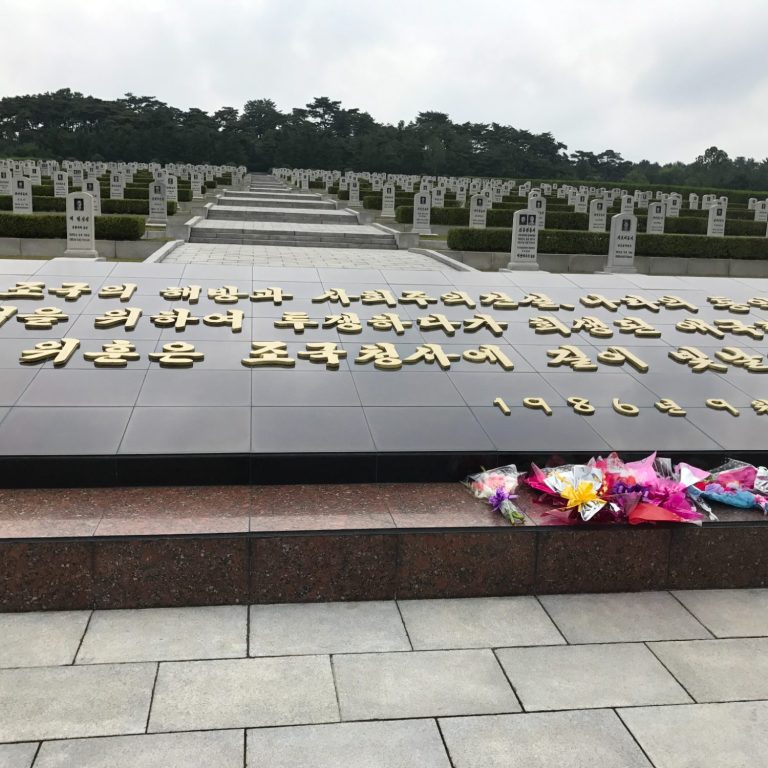
The K-Neutrality Initiative is a bold entry into a new era of Sovereign Peace. By adopting a multilateral legal framework, Korea can finally transcend its role as a geopolitical buffer and emerge as the essential anchor for global stability.
The Geopolitical Stabilizer Model
- Hard Power: Utilizing Korea's military and economic scale (Hyunmoo-5, Semiconductors)
- Soft Power: Leveraging the global influence of the K-Wave for diplomatic consensus.
- Diplomatic Power: Implementing the "Transcendence Diplomacy" model to move beyond block-based ideology
The Framework: A Realist Path to Sovereign Peace
Strategic Vision: From Armistice to Engaged Neutrality
The K-Neutrality Initiative advocates for a paradigm shift: transitioning the Korean Peninsula from a state of suspended conflict into a permanent status of Engaged Neutrality. By replacing the fragile 1953 Armistice with a formal Peace Treaty, we secure the national autonomy required to stabilize Northeast Asia and remove historical flashpoints between global powers.
Promising Global Strategy Assets
South Korea possesses unique global strategy assets—including its technological, educational, and economic leadership—that make a neutral framework a benefit to all regional stakeholders. This "Hub of Sovereign Peace" ensures that if the U.S. recognizes Korean neutrality, China and other neighboring powers must also acknowledge this sovereign status for the benefit of global stability.
The Three Core Pillars of the 2026 Roadmap
- Sovereign Security: Moving beyond the "Korea Discount" and "buffer zone" status to ensure independent peace and national autonomy.
- Active Neutralization: Utilizing the "Swiss Model" of active diplomacy and mediation to transform the DMZ into a global hub of innovation.
- Democratic Security: Building on a 100-year legacy of indigenous social entrepreneurship and family resilience—the "footwork" that anchors our national identity.
Glossary: The K-Neutrality Framework
1. Daedong (Grand Unity)
Definition: A traditional Korean philosophical framework of collective self-reliance and shared prosperity.
Strategic Context: Beyond a mere ideal, it serves as the historical 'Proof of Concept' for an autonomous socio-economic system, successfully implemented by Lee Jong-man in the 1930s to foster national resilience.
2. Sovereign Neutrality
Definition: A proactive diplomatic status where the Korean Peninsula functions as a stabilizing pivot in Northeast Asia, independent of superpower polarization.
Strategic Context: Unlike passive neutrality, this is an active strategy to safeguard national integrity while acting as an honest broker for regional peace.
3. Life-Motherhood
The Core Definition: A governing philosophy that prioritizes the protection, nurturing, and sustainability of all life forms over ideological or political interests.(This is not a biological sentiment, but a Sovereign Will to Nurture, establishing a new global standard for human and environmental security.)
The Philosophical Shift: Life-Motherhood redefines the state’s role from a 'power entity' to a 'nurturing entity.' It is the principle of preserving and flourishing all life forms as the highest priority of governance, transcending ideological divides.
The Strategic Application: Within the K-Neutrality Initiative, Life-Motherhood serves as the ethical engine. It asserts that true national security is achieved not through military dominance, but through the 'maternal power' to protect the ecosystem and human dignity.
4. K-Humanity
Definition: A modern evolution of the Korean 'Hongik Ingan' (Broadly benefit humanity) ideal, focused on bridging global divides through compassion and practical cooperation.
Strategic Context: The cultural and ethical 'soft power' that justifies Korea’s unique role as a mediator between East and West.
5. Active Neutrality
Definition: A dynamic foreign policy approach that doesn't just avoid conflict but actively shapes a peaceful environment through multilateral diplomacy and economic cooperation.
Strategic Context: The operational mechanism of the 2026 Roadmap to ensure regional stability.
6. Proof of Concept
Definition: The historical and empirical evidence—specifically the Daedong Industrial and Agricultural Communities—that demonstrates the feasibility of self-reliant, neutral systems in Korea.
7. Neutralization (K-Neutrality Model) The strategic transformation of the Korean Peninsula into a permanent buffer zone.
- Active Mediation: Adopting the Swiss spirit of proactive diplomacy to maintain regional peace.
- Legal Shield: Utilizing the Austrian State Treaty (1955) template to prohibit external territorial claims and ensure sovereign security.
- Purpose: To bridge international "cool logic" with Korean "earnest aspirations," providing a clear blueprint for national consensus.
Steps to Achieve: A Roadmap to Harmony
Our journey toward K-Neutrality follows a patient compass through three transformative phases. We begin by cultivating a shared national vision and building trust through heart-to-heart cultural exchanges. As momentum builds, we expand humanitarian connections and economic projects that prove the mutual benefits of a neutral market. This path culminates in the formalization of a permanent Peace Treaty and international recognition, celebrating the undivided heart of a nation that has finally come home to itself.
The Language of Peace: Nonviolent Communication (NVC)
Our journey is guided by the principles of Nonviolent Communication (NVC). By shifting our dialogue from judgment to empathy, we create the psychological space required for Active Neutralization. This 'heart-work' ensures that our roadmap is not just a political agreement, but a profound human reconciliation that honors the dignity of every Korean. Our framework transforms the discourse of conflict into the language of sustainable peace. This codified model represents the culmination of two decades of strategic evolution (2006–2026).